Crib Premium Zippered Encasement
- Crib
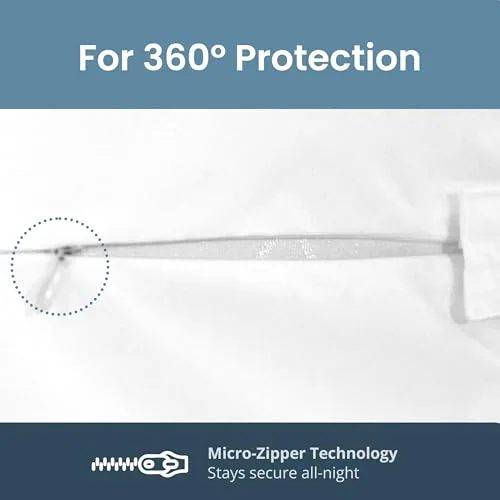
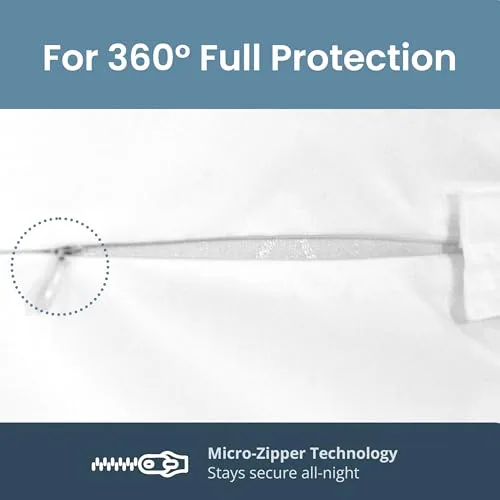
- Zips on 6 sides
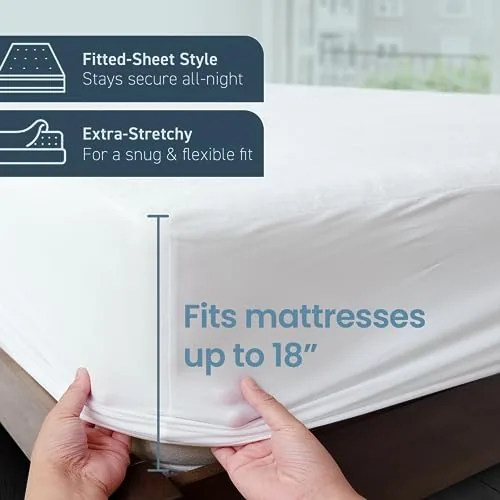
- Fits up to 15 in
cotton blend, waterproof back, quiet face
$34.994.6 out of 5
Care
On this page
A mattress cover is sold as an answer to dust mites, and it is half of one. The other half is a washing machine, and the guidance that recommends the cover asks for both in the same breath.
General information drawn from published federal guidance, read at the source on the date shown beside the link. It is not medical advice. Anyone managing asthma or an allergy should work from their own doctor's plan.
Dust mites are too small to see. They eat the skin flakes that come off a sleeping body, and a bed supplies those at a rate nothing else in the house matches. Every home has them. That is the starting position, not a failure of housekeeping.
The mite itself is harmless to touch. What triggers asthma and allergy is the material it leaves behind, which dries, breaks up and travels with the dust when the bed is disturbed. Every time you sit down on the mattress, some of it moves.
The federal asthma page puts it plainly: mites live in mattresses, pillows, carpets, upholstered furniture and soft toys, and their body parts and droppings are what cause the reaction.
The Environmental Protection Agency lists the household steps for a person with asthma. Two of them concern the bed, and they arrive together.
“wash bedding in hot water once a week, and dry completely.Use dust proof covers on pillows and mattresses”
One sentence, two instructions, and the order tells you something. The wash comes first. A cover holds the reservoir on the far side of a fabric layer, and the weekly wash removes what has accumulated on the near side, which is where your face has been.
Neither step replaces the other. A cover on an unwashed bed leaves the new material sitting on top of it. A hot wash on an uncovered mattress leaves the years already inside the mattress untouched.
The phrase in the guidance is dust proof covers on pillows and mattresses, and it describes a barrier rather than a treatment. Nothing is killed. What changes is which side of the fabric the material sits on.
A zippered encasement does this best, because it closes on six sides. A fitted protector covers the surface you sleep on and leaves the underside open, which is enough for a bed that is already clean and short of what an allergy plan asks for.
The cover also stops the reservoir growing. Skin flakes that land on a barrier get washed away with the barrier rather than working into the fill.
Zippered on all six sides, cut to the depth of the mattress.
cotton blend, waterproof back, quiet face
cotton blend, waterproof back, quiet face
cotton blend, waterproof back, quiet face
cotton blend, waterproof back, quiet face
Sheets, pillowcases and the cover itself carry the load between washes. Once a week, hot, dried completely, is the instruction as published.
Dried completely is not a throwaway line. Damp bedding put back on a bed is a humid environment, and humidity is what mites need to survive. The drying matters as much as the washing.
Which brings the problem this page exists to solve, because hot water is what the bedding wants and heat is what a waterproof cover cannot take.
The waterproof layer on these covers is a thin membrane bonded to the back of the face fabric. It is a plastic film in everything but name, and plastic films soften, stiffen and crack when they are cooked.
A hot machine wash and a hot tumble dry will do that within a year. The cover will look fine and stop working: the film goes brittle, cracks at the fold lines, and liquid starts arriving at the mattress through cracks nobody can see.
So the two instructions split. Wash the sheets and pillowcases hot, as the guidance asks. Wash the covers warm and tumble them low, which is what keeps them alive to do their job.
The face fabric decides how a cover feels and how it sounds. Counted from the range as it stands today:
| Face fabric | Covers | What it means in use |
|---|---|---|
| Cotton blend | 13 | Smooth cotton face over the membrane |
| Cotton terry | 6 | Looped cotton face. Absorbs before the membrane has to work, and muffles it |
| Bamboo viscose | 5 | Viscose knit face. Cooler to the touch than terry |
| Polyester | 5 | Knit polyester face. The lightest of the four |
Terry and knit faces put a layer of cloth between you and the membrane, so most people never hear the covers here. A bare film face is the version that crackles, and we do not make one.
The guidance names pillows and mattresses in the same sentence, and it names them in that order. A pillow holds a face against it for eight hours, absorbs everything that comes off it, and has a fraction of the volume to hide it in.
Cover it, and wash the pillowcase weekly with the sheets. A pillow protector goes between the pillow and the case, zips shut, and washes on the same warm cycle as everything else here.
A protector for the mattress and two zippered pillow covers in one order. The pillow is the piece of the job most people leave undone.
$56.685.0 out of 5
The fabric outlives the membrane. Expect the face to look serviceable long after the waterproofing has stopped working. A cover rarely announces its own retirement.
The test is a cup of water on the top face, left five minutes. Lift it and feel the underside. Dry means the membrane is intact. Cool and damp means it has started to pass, and the cover is now a fitted sheet.
Washed warm and dried cool, several years is a reasonable expectation. Washed hot every week, a year or two.
A new cover out of the packet can smell of the laminate. It goes with one wash and a night in open air, and it is not a sign of anything.
The crackle is the complaint people fear most and the one that turns up least. It comes from the membrane being loose against the sheet above it. A cover fitted taut and slept on for a week goes quiet, and one left loose on a mattress two sizes too small will not.
We cannot tell you how much of your reaction is dust mites. That is a question for a doctor with a test, and plenty of people who blame the bed turn out to be reacting to something in the room instead.
We do not publish allergen pore ratings, because the number by itself tells you nothing useful without a test method beside it, and we have no test method to show you.
What we can tell you is what each cover is made of, which sides it closes, what temperature it survives and what the published guidance actually says. The rest of the plan belongs to you and your doctor.
SafeRest makes bedding barriers in two shapes. SafeRest fitted mattress protectors go on like a fitted sheet and take the spill. SafeRest zippered encasements zip closed on all six sides and seal. Between them we cover 9 bed sizes and 50 products.
Working through a problem rather than a product? Our guide to five sides or six sets the two shapes side by side with the federal wording on covers that seal. The SafeRest guide to depth and fit explains why a zip that will not close is a measuring error rather than a manufacturing one, and the dust mite guide covers the washing half of the job.
The rest of the bed matters too: SafeRest pillow protectors for the item that touches a face all night, SafeRest box spring encasements for the hollow wooden base underneath, and SafeRest padded protectors where a mattress has gone hard and needs some loft back.